
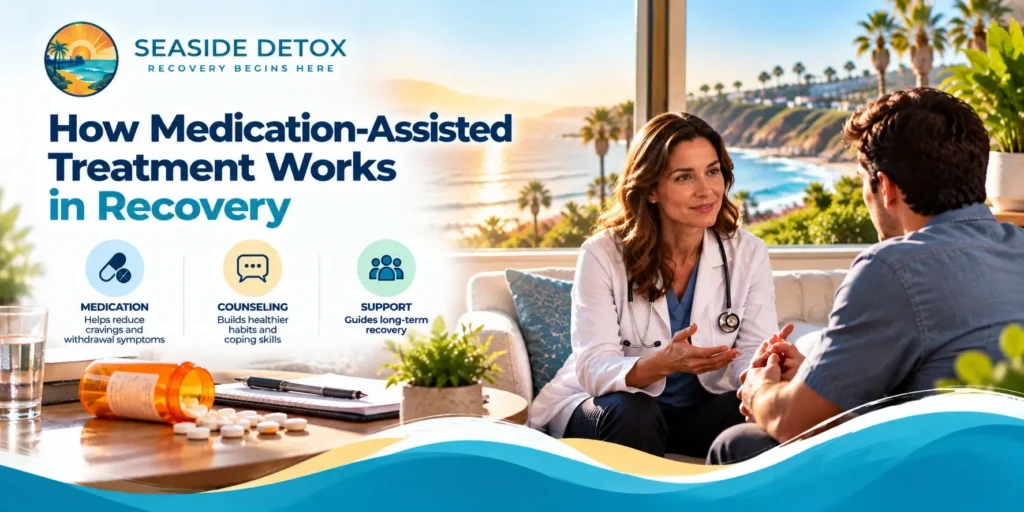
Cravings and withdrawal symptoms may make it difficult to quit even though there is a willingness to make changes. In such a case, medical assistance can be used to handle the situation.
Medication-assisted treatment is a combination of medicines that have been proven effective, counseling, and other types of treatment. Such treatment can decrease cravings and help patients participate in the program. Depending on the substance and health condition of the patient, the therapy may differ. For individuals struggling with prescription medication dependence, Inpatient Prescription Drug Addiction Treatment can provide structured care and support throughout the recovery process.
Medication-assisted Treatment (MAT)
Medication-assisted treatment combines medicine with behavioral care. It helps address the physical and mental effects of substance use disorders.
There are medications which can facilitate the detoxification process and there are those which will suppress cravings and minimize certain consequences of the substance use. The counselors help to identify the triggers, to cope with stress and develop healthier habits.
The providers may adjust the treatment program according to the needs of a particular individual. SAMHSA provides information regarding the possible combinations of these treatments.
What Medications Can Help?
Each drug choice is determined by the substance. A clinician will assess your health and substance use history before suggesting medication.
For Opioid Use Disorder
Opioids are heroin and other prescribed drugs for pain relief. For this substance, there are three medications that may help:
- Methadone can help with reducing of craving and detox symptoms.
- Buprenorphine reduces craving and detoxifies patients.
- Naltrexone blocks the effect of opioids. The drug should be administered only when the opioid leaves the body, or it might cause abrupt withdrawal.
For Opioid Use Disorder, this treatment can decrease the risk of overdosing. FDA provides guidelines for drug choices.
For alcohol use disorder
Doctors may prescribe medicines to help you reduce drinking or avoid returning to alcohol.
- Naltrexone can reduce cravings and the rewarding effects of drinking.
- Acamprosate can help some people maintain abstinence after they stop drinking.
- Disulfiram causes unpleasant effects if you drink alcohol while taking it.
They do not replace medical care for alcohol withdrawal. NIAAA explains these options. Your clinician may also check liver or kidney health, pregnancy status, and other conditions before prescribing a medicine. Some options can interact with pain medicines or sedatives. Share any supplements or non-prescription drugs you take, too, before you begin treatment. Never use another person’s prescription or change your dose on your own. Medication-assisted treatment works best when the plan is reviewed as your needs change.
What Happens in the Course of Treatment?
Treatment using medication frequently involves a health assessment. This is where your treatment team considers your consumption habits, your health, and what your goals are.
The following may be involved in care:
- Assessment: Consider your health status, your medications, and potential hazards.
- Withdrawal assistance: Observe withdrawal symptoms and provide assistance.
- Medication selection: Determine a good drug for you and see how well it suits you.
- Counseling: Learn to deal with triggers, stresses, and other factors.
Why Is Counseling Important?
The following things might be achieved through counseling:
- Recognizing the triggers for drug abuse.
- Handling stress without resorting to substance abuse.
- Formation of habits that foster good sleep and general wellbeing.
- Improving communication with family members and loved ones.
- Planning how to handle cravings when they arise.
The health care providers will probably use cognitive behavioral therapy (CBT). Sessions in group or family settings might be recommended as well.
Ready to explore treatment options? Learn more about our opioid addiction treatment in California and take the next step toward recovery.
Is the Therapy Safe?
This therapy needs to be medically supervised. Make sure to notify your physician of all the substances that you are using. Never adjust your dose or stop the therapy without prior approval from a doctor.
The therapy can trigger seizures or severe delirium due to alcohol withdrawal. Get medical help immediately if you experience any of these symptoms. There is a particularly high risk of an overdose among opioid users, who have not been taking the drug for a while.
How Can You Prepare?
To prepare:
- Be honest about what you use and how often.
- Share any past withdrawal symptoms or health concerns.
- Ask about side effects and how to take each medicine.
- Discuss counseling, follow-up visits, and support after discharge.
- Keep emergency contacts and care instructions nearby.
A clinician can explain your options and help you choose a safe next step.
Ready to take the next step toward recovery? Explore our treatment programs at Seaside Detox and find the support that fits your needs.
Conclusion
Recovery will involve medical attention, medication, counseling, and therapy. A proper program will lower your cravings, and also develop positive behaviors.
Seaside Detox provides detox and residential services, and also uses medications where necessary. Its medication assisted treatment approach may support recovery as part of an individual care plan. View the Seaside Detox Website for more details about their programs.
Frequently Asked Questions
Will medication-assisted treatment be a substitute for therapy?
No. Drugs will ease cravings and withdrawal symptoms, but therapy will help identify your triggers and change your negative behaviors. Many programs combine both approaches.
For how long will treatment take?
It is highly individual and depends on your needs and progress. Never discontinue medication without consulting your therapist.
Could these medications create dependence?
Yes, some of the drugs might create physical dependence and need to be managed properly. Consult your therapist about using them responsibly.
Could detoxification be enough to overcome addiction?
Detox will help control withdrawal symptoms, but it won’t solve the reasons of substance abuse.
