
Deciding to stop drinking is hard enough without wondering what your body will go through next. Alcohol withdrawal can range from mild discomfort to a genuine medical emergency, and the timeline looks different for everyone. Knowing what to expect, hour by hour and day by day, makes the process far less frightening. This guide breaks down how long withdrawal typically lasts, what happens during each stage, and why alcohol withdrawal programs in Oceanside, CA exist to keep this process safe rather than something to manage alone at home.
How Long Does Alcohol Withdrawal Last?
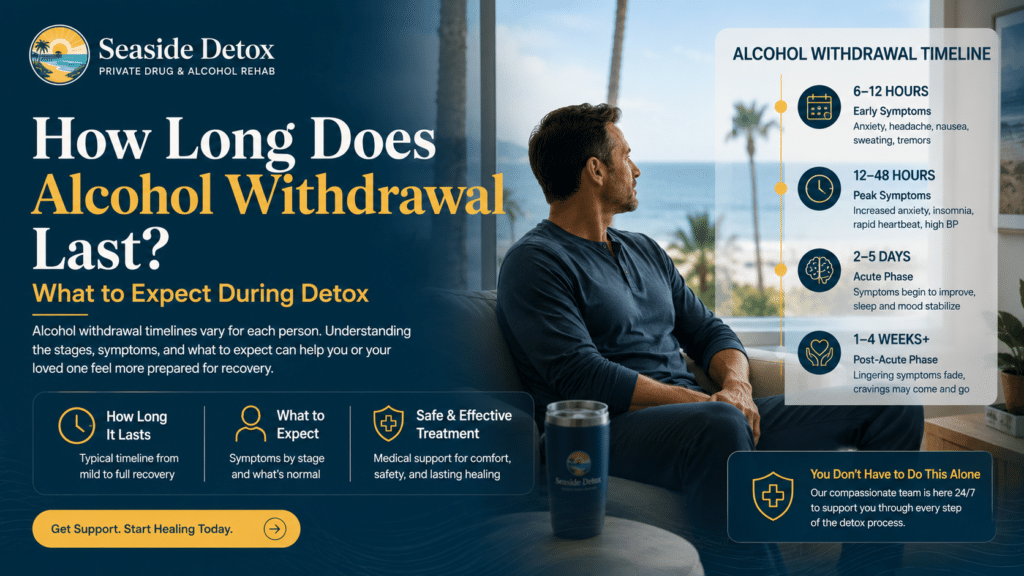
For most people, alcohol withdrawal symptoms peak between 24 and 72 hours after the last drink and begin to ease within about a week, though some symptoms can linger for weeks, according to the Cleveland Clinic. The exact timeline depends on how long and how heavily someone has been drinking.
Alcohol Withdrawal Timeline
| Time Since Last Drink | Typical Symptoms | Risk Level |
| 6–12 hours | Anxiety, tremors, headache, nausea, sweating | Low to moderate |
| 12–24 hours | Increased tremors, irritability, insomnia | Moderate |
| 24–48 hours | Elevated heart rate, confusion, seizure risk peaks | High |
| 48–72 hours | Delirium tremens (DTs) may begin in severe cases | Severe |
| Day 5–7 | Physical symptoms fade for most people | Declining |
| Weeks 2+ | Lingering insomnia, mood changes, cravings | Low, gradual |
What Determines How Long Withdrawal Lasts?
No two people go through withdrawal the exact same way. A few factors shape how long and how intense it gets:
- How long you’ve been drinking heavily: Years of daily use typically mean a longer, more intense withdrawal than a few months of heavy drinking.
- How much alcohol you typically consume: Higher daily intake generally means a stronger physical dependence.
- Age and overall health: Liver function, heart health, and age all affect how the body handles withdrawal.
- History of past withdrawal: Each prior withdrawal episode can make the next one more severe, a pattern sometimes called kindling.
- Co-occurring substance use: Using alcohol alongside benzodiazepines or opioids can complicate and extend withdrawal.
What to Expect During Medical Detox
Medical detox exists specifically to manage the risks above under professional supervision. Here’s what the process generally looks like:
- Initial assessment: A medical team reviews drinking history, health conditions, and current symptoms to determine withdrawal risk.
- Vital sign monitoring: Blood pressure, heart rate, and temperature are checked regularly, since these numbers signal how withdrawal is progressing.
- Medication support: Benzodiazepines are commonly used to reduce seizure risk and ease symptoms, tapered as the body stabilizes.
- 24-hour supervision: Nursing staff remains available around the clock during the highest-risk window, typically the first 72 hours.
- Transition planning: Once physically stable, most people move into residential or outpatient treatment to address the underlying substance use disorder.
When Withdrawal Becomes a Medical Emergency
Certain signs mean withdrawal has moved beyond something to manage at home. Seek emergency care immediately if any of the following occur:
- Seizures or convulsions
- Hallucinations, confusion, or disorientation
- A body temperature above 101°F
- A resting heart rate above 120 beats per minute
- Severe agitation or an inability to recognize familiar people or surroundings
These are hallmark signs of delirium tremens, a condition that requires immediate medical attention.
Alcohol Withdrawal Programs in Oceanside, CA
Oceanside sits along the North San Diego County coast, giving residents access to medically supervised detox without needing to travel far from home. A supervised alcohol withdrawal program typically includes daily physician oversight, medication to manage symptoms safely, and a calm, structured environment during the highest-risk days.
Seaside Detox operates a private, waterfront detox and residential program in Oceanside, staffed by Advanced Practice Registered Nurses, Registered Nurses, and a board-certified Addiction Medicine physician. Every client begins with a confidential assessment to determine what level of care fits their specific situation.
FAQs
How long does alcohol withdrawal last before I feel normal again?
Acute physical symptoms usually peak within 24 to 72 hours and fade over the following week. Some people experience lingering symptoms like insomnia or mood changes for several weeks afterward.
Can I detox from alcohol at home safely?
For heavy or long-term drinkers, home detox carries real risk, including seizures and delirium tremens. Anyone with a history of severe withdrawal or daily heavy drinking should detox under medical supervision.
What’s the difference between alcohol withdrawal and delirium tremens?
Standard withdrawal includes symptoms like tremors, anxiety, and nausea. Delirium tremens is a severe, potentially fatal complication involving confusion, hallucinations, and dangerous shifts in heart rate and temperature, usually starting 48 to 72 hours after the last drink.
How do I find alcohol rehab in Oceanside that includes detox?
Look for an alcohol rehab center in Oceanside, CA, that offers medical detox on-site with 24-hour nursing supervision, followed by residential or outpatient treatment. Verifying insurance coverage beforehand can clarify what’s available.
Does insurance cover alcohol withdrawal programs?
Use up and down arrow keys to resize the meta box pane.
Most major PPO plans cover some portion of medical detox and residential treatment. Coverage depends on the specific plan, so it’s worth verifying benefits directly with the provider before starting.
Take the Next Step With Seaside Detox
Withdrawal is temporary, but going through it without medical support carries real risk. Seaside Detox offers medically supervised alcohol withdrawal programs in Oceanside, CA, with 24-hour nursing care and a physician-led treatment team.
Take the next step in your wellness and detox journey with Seaside Detox!
