
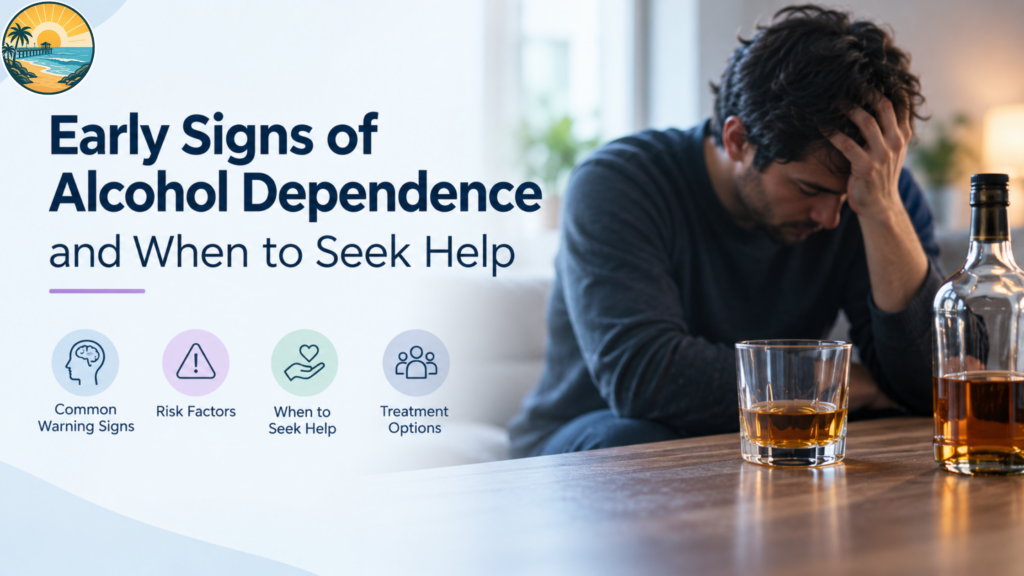
Alcohol dependence can develop slowly. The first warning signs may be easy to miss. You may drink more than you planned, or find it hard to stop once you start. These can be signs of alcohol dependence. But they do not always appear together.
Alcohol use disorder (AUD) is diagnosed when a person has at least two symptoms within 12 months, and the symptoms can range from mild to severe; early help can reduce the risk of serious health and relationship problems. In this article, we will discuss the early signs of alcohol dependence and the treatment options available.
What Alcohol Dependence Can Look Like
Alcohol dependence involves loss of control over drinking and is medically known as alcohol use disorder.
Common signs of alcohol dependence include:
- Drinking more or for longer than planned.
- Trying to cut down but being unable to do so.
- Spending a lot of time drinking or recovering from drinking.
- Having strong urges to drink.
- Missing work, or family duties because of alcohol.
- Giving up activities you once enjoyed.
- Continuing to drink even when it causes problems.
- Needing more alcohol to get the same effect.
- Having withdrawal symptoms after stopping or reducing alcohol.
- Drinking to prevent or reduce withdrawal symptoms.
One symptom does not mean you have AUD. A doctor or addiction professional will look at your symptoms and drinking pattern over the past year.
Early Alcohol Addiction Symptoms to Watch
Some alcohol addiction symptoms affect your body. Others affect your daily life and choices.
| Warning sign | What it may look like |
| Loss of control | You drink more than you planned |
| Craving | You often think about drinking |
| Tolerance | You need more alcohol for the same effect |
| Withdrawal | You shake, sweat, feel sick, or feel anxious after stopping |
| Missed duties | Alcohol affects work, school, or family duties |
| Continued drinking | You keep drinking despite problems |
| Fewer activities | You stop doing things you once enjoyed |
NIAAA uses these symptoms when assessing AUD. Two or three symptoms are classed as mild AUD. Four or five are moderate. Six or more are severe.
Withdrawal Is a Major Warning Sign
Withdrawal needs special attention. After long-term heavy drinking, suddenly stopping can cause mild to life-threatening withdrawal.
Early withdrawal can cause:
- Anxiety or irritability
- Shaking or tremors
- Sweating
- Nausea or vomiting
- Trouble sleeping
- A fast heart rate
Severe withdrawal can cause seizures or delirium tremens. Alcohol withdrawal can be dangerous. Do not assume that you can safely stop heavy drinking without medical advice. Your risk may be higher if you have had severe withdrawal or other health problems before.
When Should You Seek Help?
You do not need to wait for a major crisis before asking for help. Talk to a doctor or addiction professional when:
- You have tried to stop but could not.
- You often drink more than you planned.
- You have withdrawal symptoms after stopping.
- Alcohol affects your health, or relationships.
- You drink in situations that put you or others at risk.
- You need alcohol to sleep, calm down, or feel normal.
- People close to you are worried about your drinking.
A professional assessment can help identify AUD and determine the right level of care. Treatment may include outpatient care, or medical withdrawal management.
Inpatient or Outpatient Care: What Is the Difference?
An Inpatient Alcohol Rehab California program provides 24-hour residential care. It may be used when withdrawal could be dangerous or when you need close medical and clinical support.
An outpatient treatment program lets you receive care while living at home. Care may include therapy and regular clinical visits.
The right setting depends on your health and ability to stay safe outside treatment. For people who need residential care, Inpatient Alcohol Rehab California programs may include medical detox and residential treatment. Seaside Detox states that its California facility offers medically supervised detox and residential services in Oceanside.
An outpatient treatment program may work for people who can safely remain at home while receiving regular care. ASAM recommends a higher level of care when severe withdrawal symptoms or other medical risks develop.
What Happens After Withdrawal?
Detox is only the first stage of treatment. It helps manage the physical effects of stopping alcohol. It does not treat every reason behind alcohol use.
Long-term care may include therapy and medication. NIAAA lists naltrexone and disulfiram as FDA-approved medications for AUD.
For some people, an outpatient treatment program can provide continued therapy and medication support after detox or residential care. Your treatment plan should match your symptoms and goals.
When Is Alcohol Withdrawal an Emergency?
Severe withdrawal needs urgent medical care. Seek emergency help for:
- Seizures
- Severe confusion
- Hallucinations
- Fainting
- Severe agitation
- Persistent vomiting
- Major changes in heart rate or blood pressure
ASAM recommends a higher level of care when severe withdrawal, or unstable vital signs occur. If you are considering Inpatient Alcohol Rehab California, speak with a medical professional about your withdrawal risk first. Seaside Detox also describes its medical detox service as providing clinical monitoring and medication management when needed.
Conclusion
Recognizing alcohol addiction symptoms early gives you more time to address the problem. You do not have to wait for severe withdrawal or a major crisis before asking for help.
A medical or addiction professional can assess your drinking and help determine whether you need medical detox or another form of care. Contact Seaside Detox to get information about its California detox and residential services for people who need a structured setting.
FAQs
What are the first signs of alcohol dependence?
Common signs include drinking more than planned and continuing despite problems. Two or more AUD symptoms within 12 months can meet the clinical threshold for AUD.
Can you have alcohol use disorder without drinking every day?
Yes. You do not have to drink every day to have AUD. Doctors look at symptoms such as loss of control and withdrawal.
Is it dangerous to stop drinking suddenly?
It can be dangerous after prolonged heavy drinking. Severe withdrawal can cause seizures or delirium tremens. Medical advice can assess your risk and need for supervised withdrawal.
Do you always need inpatient alcohol treatment?
No. Treatment may take place in outpatient or inpatient settings, and your level of care should match your withdrawal risk and ability to stay safe.
