
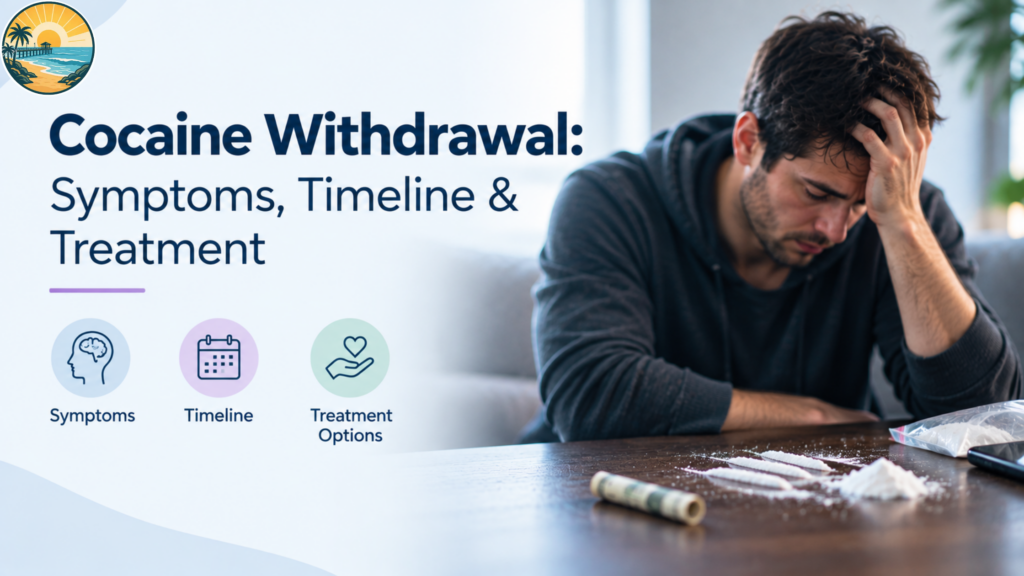
Cocaine detox starts when regular cocaine use is reduced or stopped. It often begins with a “crash.” You may feel very tired or have strong cravings. Anxiety and irritability are also common. Unlike alcohol or some other drugs, cocaine withdrawal usually does not cause a severe physical withdrawal syndrome. Still, the mental effects can be serious. Depression or thoughts of suicide can occur. Your symptoms can vary based on how often you used cocaine, and whether you used other drugs.
What Are the Symptoms of Cocaine Withdrawal?
Cocaine detox symptoms can affect your mood and ability to focus. Some people have several symptoms at once. Others have only a few.
Common symptoms include:
- Strong cravings for cocaine
- Extreme tiredness
- Low or depressed mood
- Anxiety or restlessness
- Irritability
- Sleeping more than usual
- Trouble sleeping
- Increased appetite
- Poor concentration
- Slowed thinking
- Headaches and body aches
- Unpleasant or vivid dreams
- Less interest in activities you usually enjoy
The “crash” can start soon after a period of heavy use ends. Strong cravings can also appear during this stage. With long-term heavy use, low mood and cravings may last much longer than the first few days.
Cocaine Withdrawal Timeline
The Cocaine detox Timeline is different for each person. There is no fixed schedule that applies to everyone. WHO guidance notes that stimulant withdrawal can start within about 24 hours after the last use. The early phase often lasts several days. Some symptoms can continue for weeks or longer.
First 24 to 48 hours
The first phase is often called the crash. You may feel very tired and sleep for long periods. Your appetite may increase. You may also feel sad or irritable.
Cravings can be strong during this period.
Days 3 to 7
Your energy and mood may still be low. Sleep may remain irregular. You may have trouble focusing or feel little interest in normal activities.
Some people also have vivid dreams. Cravings may continue even when the first crash has passed.
One to three weeks
Many early symptoms begin to ease. However, low mood and cravings can continue. This is more likely after long periods of heavy cocaine use.
Beyond three weeks
Some people continue to have cravings or mood problems after the early withdrawal phase. MedlinePlus notes that depression and cravings can last for months after long-term heavy use.
The Cocaine detox Timeline can also change when you use alcohol or other drugs. A health professional should review this combination because withdrawal risks can differ.
When Do You Need Medical Help?
Cocaine withdrawal is often treated with support and symptom care. But some symptoms need urgent attention.
Get emergency medical help if you have:
- Thoughts of suicide or self-harm
- Severe confusion
- Hallucinations
- Extreme paranoia or agitation
- Chest pain
- Seizures
- Trouble breathing
- Signs of a heart attack or stroke
Cocaine itself can cause a heart attack and dangerous changes in heart rhythm. An emergency can occur during or after cocaine use.
How Is Cocaine Withdrawal Treated?
There is no specific medicine approved to treat cocaine detox. WHO recommends a supportive setting during withdrawal. Doctors may still use medicines to manage specific symptoms, such as severe agitation or sleep problems.
Treatment should also address cocaine use disorder. This may include:
- One-on-one counseling
- Cognitive behavioral therapy
- Contingency management
- Family support
- Relapse prevention
- Ongoing recovery support
WHO recommends cognitive behavioral therapy and contingency management for people with cocaine or other stimulant dependence.
Contingency management uses rewards to support treatment goals. For example, a program may give incentives for attending treatment or having a stimulant-negative drug test. SAMHSA describes this approach as having strong evidence for stimulant use disorders.
Some medications may also be considered by a doctor for certain people with cocaine use disorder. The choice depends on your health and symptoms. Medication should not be started without medical advice.
What Role Does Detox Play?
Detox helps you stop using cocaine while your body and mind adjust. It can provide monitoring, support, and care for withdrawal symptoms. It does not, by itself, treat the reasons behind ongoing cocaine use.
SeaSide Detox provides information about medically supervised detox and residential care in California. Its services should be checked directly for current staff, treatment levels, and admission details.
When comparing Cocaine Addiction Treatment in California, look at the type of medical care offered. Check whether the program can manage mental health symptoms and emergencies. Ask about therapy and aftercare too.
A good treatment plan should match your needs. It should also account for other drugs you use and any mental or physical health problems.
Conclusion
Cocaine withdrawal can affect your mood and cravings. The first few days can bring a strong crash. Some symptoms may last for weeks or longer, especially after heavy or long-term use.
Cocaine Addiction Treatment In California may include supervised detox, counseling, behavioral treatment, and ongoing support. Consult SeaSide Detox for information about detox and residential treatment. Your doctor or treatment team can help you decide what level of care is safe for you.
FAQs
How long does cocaine withdrawal last?
The first crash often starts within hours to a day after the last use. Early symptoms may last several days. Tiredness, low mood, poor focus, and cravings can continue for weeks. Some people who used cocaine heavily for a long time may have cravings or depression for months.
Is cocaine withdrawal dangerous?
Cocaine withdrawal is usually not associated with the severe physical withdrawal seen with alcohol or some sedatives. However, severe depression, suicidal thoughts, psychosis, or other mental health symptoms can occur. Cocaine use itself can also cause serious heart and brain problems.
Can medicine treat cocaine withdrawal?
There is no specific medicine recommended for cocaine withdrawal. Doctors may use medicines to manage certain symptoms when needed. Treatment for cocaine use disorder usually relies on behavioral approaches and ongoing support.
What should you check before choosing a treatment center?
Check the level of medical care, staff qualifications, emergency procedures, therapy options, mental health support, and aftercare. Ask how the center treats cocaine use disorder and how it handles other substances or health conditions.
